Buggered Mind of Neale Sourna, The

Opines, comments, rants, concerns, imaginings from Neale Sourna, fiction author and more -- www.Neale-Sourna.com, www.PIE-Percept.com, www.ProjectKeanu.com, www.AuthorsDen.com/nealesourna, www.CafeShops.com/NealeSourna, www.Writing-Naked.com, and www.CuntSinger.com

Saturday, June 11, 2016

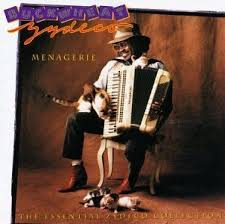
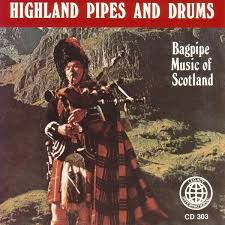
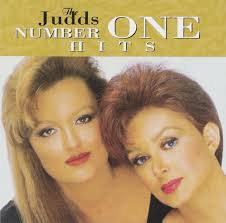
New albums of music variety added to Neale Sourna's Eclectic and Covers Online Radio Station 24/7

Neale Sourna's Eclectic and Covers Online Radio Station 24/7

http://www.radionomy.com/en/radio/eclecticandcovers/index


http://www.radionomy.com/en/radio/eclecticandcovers/index

Labels: , , , , , , , , , , , , , , , , , ,

Monday, March 18, 2013

Rise of Latino population blurs US racial lines By HOPE YEN | Associated Press

http://news.yahoo.com/rise-latino-population-blurs-us-racial-lines-114944593.html

WASHINGTON (AP) — Welcome to the new off-white America.

A historic decline in the number of U.S. whites and the fast growth of Latinos are blurring traditional black-white color lines, testing the limits of civil rights laws and reshaping political alliances as "whiteness" begins to lose its numerical dominance.

Long in coming, the demographic shift was most vividly illustrated in last November's re-election of President Barack Obama, the first black president, despite a historically low percentage of white supporters.

It's now a potent backdrop to the immigration issue being debated in Congress that could offer a path to citizenship for 11 million mostly Hispanic illegal immigrants. Also, the Supreme Court is deciding cases this term on affirmative action and voting rights that could redefine race and equality in the U.S.

The latest census data and polling from The Associated Press highlight the historic change in a nation in which non-Hispanic whites will lose their majority in the next generation, somewhere around the year 2043.

Despite being a nation of immigrants, America's tip to a white minority has never occurred in its 237-year history and will be a first among the world's major post-industrial societies. Brazil, a developing nation, has crossed the threshold to "majority-minority" status; a few cities in France and England are near, if not past that point.

The international experience and recent U.S. events point to an uncertain future for American race relations.
In Brazil, where multiracialism is celebrated, social mobility remains among the world's lowest for blacks while wealth is concentrated among whites at the top. In France, race is not recorded on government census forms and people share a unified Gallic identity, yet high levels of racial discrimination persist.

"The American experience has always been a story of color. In the 20th century it was a story of the black-white line. In the 21st century we are moving into a new off-white moment," says Marcelo Suarez-Orozco, a global expert on immigration and dean of UCLA's Graduate School of Education & Information Studies.

"Numerically, the U.S. is being transformed. The question now is whether our institutions are being transformed," he said.

The shift is being driven by the modern wave of U.S. newcomers from Latin America and Asia. Their annual inflow of 650,000 people since 1965, at a rate that's grown in recent years, surpasses the pace of the last great immigration wave a century ago. That influx, from 1820 to 1920, brought in Irish, Germans, Italians and Jews from Europe and made the gateway of Ellis Island, N.Y., an immigrant landmark, symbolizing freedom, liberty and the American dream.

An equal factor is today's aging white population, mostly baby boomers, whose coming wave of retirements will create a need for first- and second-generation immigrants to help take their place in the workforce.

The numbers already demonstrate that being white is fading as a test of American-ness:

—More U.S. babies are now born to minorities than whites, a milestone reached last year.

—More than 45 percent of students in kindergarten through 12th grade are minorities. The Census Bureau projects that in five years the number of nonwhite children will surpass 50 percent.

—The District of Columbia, Hawaii, California, New Mexico and Texas have minority populations greater than 50 percent. By 2020, eight more states are projected to join the list: Arizona, Florida, Georgia, Maryland, Mississippi, Nevada, New Jersey and New York. Latinos already outnumber whites in New Mexico; California will tip to a Latino plurality next year.

—By 2039, racial and ethnic minorities will make up a majority of the U.S. working-age population, helping to support a disproportionately elderly white population through Social Security and other payroll taxes. 

More than 1 in 4 people ages 18-64 will be Latino.

—The white population, now at 197.8 million, is projected to peak at 200 million in 2024, before entering a steady decline in absolute numbers. Currently 63 percent of the U.S. population, the white share is expected to drop below 50 percent by 2043, when racial and ethnic minorities will collectively become a U.S. majority. Hispanics will drive most of the minority growth, due mostly to high birth rates, jumping in share from 17 percent to 26 percent.

The pace of assimilation for today's Latinos and Asian-Americans is often compared with that of the Poles, Irish, Italians and Jews who arrived around the turn of the 20th century and eventually merged into an American white mainstream.

There was a backlash. By the 1930s, an immigrant-weary America had imposed strict quotas and closed its borders. Those newly arrived were pushed to conform and blend in with a white mainstream, benefiting from New Deal economic programs that generally excluded blacks. The immigration quotas also cut off the supply of new workers to ethnic enclaves and reduced social and economic contacts between immigrants and their countries of origin.

"America of the Melting Pot comes to End," read a 1924 opinion headline in The New York Times. The author, a U.S. senator, pledged that strict new immigration quotas would "preserve racial type as it exists here today."

Today, data show that Latinos are embracing U.S. life but also maintaining strong ties to their heritage, aided by a new stream of foreign-born immigrants who arrive each year. Hispanics, officially an ethnic group, strive to learn English and 1 in 4 intermarry, taking a white spouse.

Nowadays, immigrants face less pressure to conform than did their counterparts from a century ago. Latinos are protected as a minority, benefiting from the 1950s civil rights movement pioneered by blacks. Nearly 40 percent of Latinos now resist a white identity on census forms, checking a box indicating "some other race" to establish a Hispanic race identity.

While growing diversity is often a step toward a post-racial U.S., sociologists caution that the politics of racial diversity could just as easily become more magnified.

A first-of-its-kind AP poll conducted in 2011 found that a slight majority of whites expressed racial bias against Hispanics and that their attitudes were similar to or even greater than the bias they held toward blacks. Hispanics also remained somewhat residentially segregated from whites in lower-income neighborhoods, hurt in part by the disappearance of good-paying, midskill manufacturing jobs that helped white ethnics rise into the middle class during most of the 20th century.

The AP survey was conducted with researchers from Stanford University, the University of Michigan and NORC at the University of Chicago.

Harvard economist George Borjas projects that by 2030, the children of today's immigrants will earn on average 10 percent to 15 percent less than nonimmigrant Americans, based on past trends, and that Latinos will particularly struggle because of high rates of poverty, lack of citizenship and lower rates of education. In 1940, the children of early 20th-century white ethnics fared much better on average, earning 21.4 percent more than nonimmigrants.

About 35 percent of Hispanic babies are currently born into poverty, compared with 41 percent of blacks and 20 percent for whites.

"How America responds now to the new challenges of racial and ethnic diversity will determine whether it becomes a more open and inclusive society in the future — one that provides equal opportunities and justice for all," said Daniel Lichter, a Cornell sociologist and past president of the Population Association of America.

The demographic shift has spurred debate as to whether some civil-rights era programs, such as affirmative action in college admissions, should begin to focus on income level rather than race or ethnicity. The Supreme Court will rule on the issue by late June.

Following a racially lopsided re-election, Obama has spoken broadly about promoting social and economic opportunity. In his State of the Union speech, he said that rebuilding the middle class is "our generation's task." Sen. Marco Rubio, R-Fla., a rising star of a mostly white Republican party now eager to attract Latino voters, is courting supporters in both English and Spanish in part by pledging programs that would boost "social mobility."

Left unclear is how much of a role government can or should play in lifting the disadvantaged, in an era of strapped federal budgets and rising debt.

The Latino immigrants include Irma Guereque, 60, of Las Vegas, who says enjoying a middle-class life is what's most important to her.

Things turned bad for the Mexico native in the recent recession after her work hours as a food server were cut at the Texas Station casino off the Strip. As a result, she couldn't make the mortgage payments on a spacious house she purchased and was forced to move into an apartment with her grandchildren.

While she's getting almost full-time hours now, money is often on her mind. Her finances mean retirement is hardly an option, even though she's got diabetes and is getting older.

Many politicians are "only thinking of the rich, and not the poor, and that's not right," Guereque said in Spanish. "We need opportunities for everyone."
___
Associated Press writers Elaine Ganley in Montfermeil, France, Jenny Barchfield in Rio de Janeiro and Michelle Rindels in Las Vegas contributed to this report.
___
Online:
Census Bureau: http://www.census.gov

EDITOR'S NOTE _ "America at the Tipping Point: The Changing Face of a Nation" is an occasional series examining the changing cultural mosaic of the U.S. and its historic shift to a majority-minority nation.

Labels: , , ,

Monday, December 19, 2011

Motivational Quote of the Day

"The biggest mistake that you can make is to believe that you are working for somebody else. Job security is gone.

The driving force of a career must come from the individual.

Remember: Jobs are owned by the company, you own your career!"

— Earl Nightingale: was an American motivational speaker and author

Labels: , , , , , , , , , , ,

Thursday, February 24, 2011

Washington: the 'blackest name' in America

George Washington AP – FILE - This undated picture shows Gilbert Stuart's portrait of George Washington.

By JESSE WASHINGTON, AP National Writer Jesse Washington, AP National Writer – Mon Feb 21, 8:58 am ET

George Washington's name is inseparable from America, and not only from the nation's history. It identifies countless streets, buildings, mountains, bridges, monuments, cities — and people.

In a puzzling twist, most of these people are black. The 2000 U.S. Census counted 163,036 people with the surname Washington. Ninety percent of them were African-American, a far higher black percentage than for any other common name.

The story of how Washington became the "blackest name" begins with slavery and takes a sharp turn after the Civil War, when all blacks were allowed the dignity of a surname.

Even before Emancipation, many enslaved black people chose their own surnames to establish their identities. Afterward, some historians theorize, large numbers of blacks chose the name Washington in the process of asserting their freedom.

Today there are black Washingtons, like this writer, who are often identified as African-American by people they have never met. There are white Washingtons who are sometimes misidentified and have felt discrimination. There are Washingtons of both races who view the name as a special — if complicated — gift.

And there remains the presence of George, born 279 years ago on Feb. 22, whose complex relationship with slavery echoes in the blackness of his name today.

___

George Washington's great-grandfather, John, arrived in Virginia from England in 1656. John married the daughter of a wealthy man and eventually owned more than 5,000 acres, according to the new biography "Washington: A Life," by Ron Chernow.

Along with land, George inherited 10 human beings from his father. He gained more through his marriage to a wealthy widow, and purchased still more enslaved blacks to work the lands he aggressively amassed. But over the decades, as he recognized slavery's contradiction with the freedoms of the new nation, Washington grew opposed to human bondage.

Yet "slaves were the basis of his fortune," and he would not part with them, Chernow said in an interview.

Washington was not a harsh slaveowner by the standards of the time. He provided good food and medical care. He recognized marriages and refused to sell off individual family members. Later in life he resolved not to purchase any more black people.

But he also worked his slaves quite hard, and under difficult conditions. As president, he shuttled them between his Philadelphia residence and Virginia estate to evade a law that freed any slave residing in Pennsylvania for six months.

While in Philadelphia, Oney Judge, Martha Washington's maid, moved about the city and met many free blacks. Upon learning Martha was planning one day to give her to an ill-tempered granddaughter, Judge disappeared.

According to Chernow's book, Washington abused his presidential powers and asked the Treasury Department to kidnap Judge from her new life in New Hampshire. The plot was unsuccessful.

"Washington was leading this schizoid life," Chernow said in the interview. "In theory and on paper he was opposed to slavery, but he was still zealously tracking and seeking to recover his slaves who escaped."

In his final years on his Mount Vernon plantation, Washington said that "nothing but the rooting out of slavery can perpetuate the existence of our union."

This led to extraordinary instructions in his will that all 124 of his slaves should be freed after the death of his wife. The only exception was the slave who was at his side for the entire Revolutionary War, who was freed immediately. Washington also ordered that the younger black people be educated or taught a trade, and he provided a fund to care for the sick or aged.

"This is a man who travels an immense distance," Chernow said.

In contrast with other Founding Fathers, Chernow said, Washington's will indicates "that he did have a vision of a future biracial society."

Twelve American presidents were slaveowners. Of the eight presidents who owned slaves while in office, Washington is the only one who set all of them free.___

It's a myth that most enslaved blacks bore the last name of their owner. Only a handful of George Washington's hundreds of slaves did, for example, and he recorded most as having just a first name, says Mary Thompson, the historian at Mount Vernon.

Still, historian Henry Wiencek says many enslaved blacks had surnames that went unrecorded or were kept secret. Some chose names as a mark of community identity, he says, and that community could be the plantation of a current or recent owner.

"Keep in mind that after the Civil War, many of the big planters continued to be extremely powerful figures in their regions, so there was an advantage for a freed person to keep a link to a leading white family," says Wiencek, author of "An Imperfect God: George Washington, His Slaves, and the Creation of America."

Sometimes blacks used the surname of the owner of their oldest known ancestor as a way to maintain their identity. Melvin Patrick Ely, a College of William and Mary professor who studies the history of blacks in the South, says some West African cultures placed high value on ancestral villages, and the American equivalent was the plantation where one's ancestors had toiled.

Last names also could have been plucked out of thin air. Booker T. Washington, one of the most famous blacks of the post-slavery period, apparently had two of those.

He was a boy when Emancipation freed him from a Virginia plantation. After enrolling in school, he noticed other children had last names, while the only thing he had ever been called was Booker.

"So, when the teacher asked me what my full name was, I calmly told him, `Booker Washington,'" he wrote in his autobiography, "Up from Slavery." Later in life, he found out that his mother had named him "Booker Taliaferro" at birth, so he added a middle name.

He gives no indication why the name Washington popped into his head. But George Washington, dead for only 60-odd years, had immense fame and respect at the time. His will had been widely published in pamphlet form, and it was well known that he had freed his slaves, Thompson says.

Did enslaved people feel inspired by Washington and take his name in tribute, or were they seeking some benefits from the association? Did newly freed people take the name as a mark of devotion to their country?

"We just don't know," Weincek says.

But the connection is too strong for some to ignore.

"There was a lot more consciousness and pride in American history among African-Americans and enslaved African-Americans than a lot of people give them credit for. They had a very strong sense of politics and history," says Adam Goodheart, a professor at Washington College and author of the forthcoming "1861: Civil War Awakening."

"They were thinking about how they could be Americans," Goodheart says. "That they would embrace the name of this person who was an imperfect hero shows there was a certain understanding of this country as an imperfect place, an imperfect experiment, and a willingness to embrace that tradition of liberty with all its contradictions."

Many black people took new names after the Revolutionary War, the Civil War, and the black power movement, says Ira Berlin, a University of Maryland history professor who has written books on the history of African-Americans.

"Names are this central way we think about ourselves," Berlin says. "Whenever we have these kinds of emancipatory moments, suddenly people can reinvent themselves, rethink themselves new, distinguish themselves from a past where they were denigrated and abused. New names are one of the ways they do it."

But for black people who chose the name Washington, it's rarely certain precisely why.

"It's an assumption that the surname is tied to George," says Tony Burroughs, an expert on black genealogy, who says 82 to 94 percent of all Washingtons listed in the 1880 to 1930 censuses were black.

"There is no direct evidence," he says. "As far as I'm concerned it's a coincidence."

___

Coincidence or not, today the numbers are equally stark. Washington was listed 138th when the Census Bureau published a list of the 1,000 most common American surnames from the 2000 survey, along with ethnic data. The project was not repeated in 2010.

Ninety percent of those Washingtons, numbering 146,520, were black. Only five percent, or 8,813, were white. Three percent were two or more races, 1 percent were Hispanic, and 1 percent were Asian or Pacific Islander.

Jefferson was the second-blackest name, at 75 percent African-American. There were only 16,070 Lincolns, and that number was only 14 percent black.

Jackson was 53 percent black. Williams was the 16th-blackest name, at 46 percent. But there were 1,534,042 total Williamses, including 716,704 black ones — so there were more blacks named Williams than anything else.

(The name Black was 68 percent white, meaning there were far more white Blacks than black Blacks. The name White, meanwhile, was 19 percent black.)

Many present-day Washingtons are surprised to learn their name is not 100 percent black.

"Growing up, I just knew that only black people had my last name," says Shannon Washington of New York City. Like many others, she has never met a white Washington.

She has no negative feelings about her name: "It's a reflection of how far we've come more than anything. I most likely come from a family of slaves who were given or chose this name."

As the creator of advertisements, events and http://www.parlourmagazine.com, she works with many Europeans, who often ask how she got her name. She plans on keeping it when she gets married, and likens her attachment to that of some black people for racist memorabilia like mammy dolls and Jim Crow signs.

"I don't exactly love it," she says of her name, "But I have to respect it."

Marcus Washington never thought much about his name as one of the few black people working in the overwhelmingly white William Morris talent agency. That changed after he filed a $25 million lawsuit in December accusing William Morris of racial discrimination.

"I'm sure that for some people there, my name triggered the thought that I was African-American, and automatically triggered biases that resulted in me not being given a fair shot," he says.

One 2004 study conducted by researchers at the University of Chicago Graduate School of Business found that job applicants with names that sound white receive 50 percent more callbacks than applicants with "black" names.

The study responded to real employment ads with more than 5,000 fictitious resumes. Half the resumes were assigned names like Emily Walsh; the other half got names like Lakisha Washington. After calculating for the difference in resume quality, the study concluded that "a white name yields as many more callbacks as an additional eight years of experience on a resume."

But what about those 8,813 white Washingtons? What is their experience?

For the family of 85-year-old Larry Washington, who traces his family tree back to England in the 1700s, the experience has changed over the years. (He says he is not related to George, who had no children.)

When he moved to New Jersey in 1962 to teach at a college there, Larry Washington's family tried to scout housing over the phone, but nothing was ever available. "When we showed up, there were plenty of houses," he recalls. After that, he taught his six children to always apply in person.

Over the years, his name made him sensitive to racism: "We just simply recognized these things, and had full sympathy with the people who were really black and getting the real treatment."

His son Paul, who in the 1970s worked for a temporary agency in Long Island, NY, says people in the offices where he was assigned always betrayed their relief when he turned out to be white. He experienced housing discrimination into the `80s, but says that no longer happens.

He is now a geology professor who has lived in ten states from Louisiana to Pennsylvania. Sometimes he wonders if his name helps him get interviews at colleges looking to recruit a rare black geologist, and if it hurts him when the college discovers that he is white.

Paul's children have had much different experiences — like his 25-year-old daughter, an English professor who teaches foreign students, whose new pupils are always amazed to meet someone with "the ultimate American name."

When Paul's brother Larry Jr. was recently traveling through customs in Japan, the inspector looked at his passport and said, "Oh, Mr. Washington!"

"His politeness and the number of times he bowed clearly indicated that he thought I was the member of a very important family," Larry Jr. recalls.

His sister Ida, a veterinarian who lives in Seattle, says she has never experienced discrimination due to her name as an adult. She is married, but uses Washington as her professional name.

"It's very distinctive. I use it with a certain amount of pride," she says.

Back in high school, she became fascinated with black history. "I think my name has made me much more aware of what African-American folks struggle with. I feel in tune with them."

Perhaps her sentiments bring the name full circle — from blacks making a connection to the greatest white Washington to a white person choosing a name associated with blackness.

"I find it touching that freed blacks wanted to identify with the American tradition and the American dream," says Chernow, the biographer. "It makes a powerful statement."

"I have to think," he says, "that George Washington would be very pleased that so many black people have adopted his name."

___

Jesse Washington covers race and ethnicity for The Associated Press. He is reachable at jwashington(at)ap.org or http://www.twitter.com/jessewashington.

___

On the Web:

Census surname study: http://www.census.gov/genealogy/www/data/2000surnames/index.html

Labels: , , , , , , , , , , , , , ,

Monday, December 27, 2010

Civil War message opened, decoded: No help coming by Steve Szkotak, Associated Press

In this Jan. 14, 2009 image shows a Civil War bottle with a message that was tucked inside at the Museum of the Confederacy in Richmond, Va. The messa AP – In this Jan. 14, 2009 image shows a Civil War bottle with a message that was tucked inside at the Museum …
By STEVE SZKOTAK, Associated Press Steve Szkotak, Associated Press – Sat Dec 25, 2010

RICHMOND, Va. – A glass vial stopped with a cork during the Civil War has been opened, revealing a coded message to the desperate Confederate commander in Vicksburg on the day the Mississippi city fell to Union forces 147 years ago.

The dispatch offered no hope to doomed Lt. Gen. John C. Pemberton: Reinforcements are not on the way.

The encrypted, 6-line message was dated July 4, 1863, the date of Pemberton's surrender to Union forces led by Ulysses S. Grant, ending the Siege of Vicksburg in what historians say was a turning point midway into the Civil War.

The message is from a Confederate commander on the west side of the Mississippi River across from Pemberton.

"He's saying, 'I can't help you. I have no troops, I have no supplies, I have no way to get over there,' " Museum of the Confederacy collections manager Catherine M. Wright said of the author of the dispiriting message. "It was just another punctuation mark to just how desperate and dire everything was."

The bottle, less than 2 inches in length, had sat undisturbed at the museum since 1896. It was a gift from Capt. William A. Smith, of King George County, who served during the Vicksburg siege.

It was Wright who decided to investigate the contents of the strange little bottle containing a tightly wrapped note, a .38-caliber bullet and a white thread.

"Just sort of a curiosity thing," said Wright. "This notion of, do we have any idea what his message says?"

The answer was no.

Wright asked a local art conservator, Scott Nolley, to examine the clear vial before she attempted to open it. He looked at the bottle under an electron microscope and discovered that salt had bonded the cork tightly to the bottle's mouth. He put the bottle on a hotplate to expand the glass, used a scalpel to loosen the cork, then gently plucked it out with tweezers.

The sewing thread was looped around the 6 1/2-by-2 1/2-inch paper, which was folded to fit into the bottle. The rolled message was removed and taken to a paper conservator, who successfully unfurled the message.

But the coded message, which appears to be a random collection of letters, did not reveal itself immediately.

Eager to learn the meaning of the code, Wright took the message home for the weekend to decipher. She had no success.

A retired CIA code breaker, David Gaddy, was contacted, and he cracked the code in several weeks.

A Navy cryptologist independently confirmed Gaddy's interpretation. Cmdr. John B. Hunter, an information warfare officer, said he deciphered the code over two weeks while on deployment aboard an aircraft carrier in the Pacific. A computer could have unscrambled the words in a fraction of the time.

"To me, it was not that difficult," he said. "I had fun with this and it took me longer than I should have."

The code is called the "Vigenere cipher," a centuries-old encryption in which letters of the alphabet are shifted a set number of places so an "a" would become a "d" — essentially, creating words with different letter combinations.

The code was widely used by Southern forces during the Civil War, according to Civil War Times Illustrated.

The source of the message was likely Maj. Gen. John G. Walker, of the Texas Division, who had under his command William Smith, the donor of the bottle.

The full text of the message to Pemberton reads:

"Gen'l Pemberton:

You can expect no help from this side of the river. Let Gen'l Johnston know, if possible, when you can attack the same point on the enemy's lines. Inform me also and I will endeavor to make a diversion. I have sent some caps (explosive devices). I subjoin a despatch from General Johnston."

The last line, Wright said, seems to suggest a separate delivery to Pemberton would be the code to break the message.

"The date of this message clearly indicates that this person has no idea that the city is about to be surrendered," she said.

The Johnston mention in the dispatch is Gen. Joseph E. Johnston, whose 32,000 troops were encamped south of Vicksburg and prevented from assisting Pemberton by Grant's 35,000 Union troops. Pemberton had held out hope that Johnston would eventually come to his aid.

The message was dispatched during an especially terrible time in Vicksburg. Grant was unsuccessful in defeating Pemberton's troops on two occasions, so the Union commander instead decided to encircle the city and block the flow of supplies or support.

Many in the city resorted to eating cats, dogs and leather. Soup was made from wallpaper paste.

After a six-week siege, Pemberton relented. Vicksburg, so scarred by the experience, refused to celebrate July 4 for the next 80 years.

So what about the bullet in the bottom of the bottle?

Wright suspects the messenger was instructed to toss the bottle into the river if Union troops intercepted his passage. The weight of the bullet would have carried the corked bottle to the bottom, she said.

For Pemberton, the bottle is symbolic of his lost cause: the bad news never made it to him.

The Confederate messenger probably arrived to the river's edge and saw a U.S. flag flying over the city.

"He figured out what was going on and said, 'Well, this is pointless,' and turned back," Wright said.

___

Online:

Museum of the Confederacy: http://www.moc.org

Labels: , , , , , , , , ,

Tuesday, June 08, 2010

Character: There is only one motivation....

"In my experience, there is only one motivation, and that is desire. No reasons or principle contain it or stand against it."
— Jane Smiley: Pulitzer Prize—winning American novelist

Labels: , , , , , , , ,

Thursday, April 12, 2007

Great Actor James Hong, Feature Docudrama 'Man of a Thousand Faces'

Press Release
Source: Dramatika Films, LLC
Dramatika Films Announces Completion of Feature Docudrama 'Man of a Thousand Faces'Wednesday April 11, 3:54 pm ET

Theatrical Release Focuses on Life and Accomplishments of Legendary Actor James Hong
LAS VEGAS, April 11 /PRNewswire/ -- Las Vegas-based Dramatika Films, LLC, announced today its completion and upcoming film release of the new docudrama "Man of a Thousand Faces," featuring veteran film and television star James Hong. This visually stunning film -- part documentary, part dramatization -- chronicles the life of the legendary actor, whose career spans more than half a century. Slated to premiere exclusively at this year's Festival de Cannes in May, "Man of a Thousand Faces" features highlights from Hong's illustrious career of nearly 500 film and television performances including blockbuster hits such as "Blade Runner," "Big Trouble in Little China," "Airplane," "Chinatown," "Black Widow," "Wayne's World 2, " "Red Corner," "Mulan," and many more.

(Photo: http://www.newscom.com/cgi-bin/prnh/20070411/LAW087)
Source: Dramatika Films, LLC
· James Hong emulates a Chinese dragon
· Click Here to Download Image

Although Hong's vast body of work has made him one of the most recognizable Asian American actors in the world, many moviegoers do not know him by name. A true character actor, James Hong has appeared with industry giants such as Jack Nicholson, Kurt Russell, Christopher Walken, Tia Carerre, Mike Myers, Richard Gere, Debra Winger, Danny Glover and David Carradine to name a few, as well as many of Hollywood's most acclaimed directors including Ridley Scott, Spike Lee, John Carpenter and Roman Polanski.

"Man of a Thousand Faces" tells of Hong's tireless efforts to combat stereotypes in Hollywood, where many Asians and Asian Americans are continually cast in stereotypical roles even today, as well as Hong's pivotal role in forming the East West Players (EWP) -- a successful theatre company showcasing the talents of the world's most popular Asian American performers. Founded in 1965, EWP alumni include Mako, B.D. Wong, Russell Wong, David Henry Hwang, Beulah Quo, and George Takei.

With a running time of approximately 90 minutes, "Man of a Thousand Faces" features more than a dozen interviews with Hong's family and fellow actors including David Carradine, Tia Carerre and Edward James Olmos. The film also features the last interview with the late, great Japanese actor Mako [we miss you and thank you], who was nominated for an Academy Award for this touching performance in "The Sand Pebbles," in which he acted along side James Hong.

"It was clear from the beginning of this tremendous project that the life of James Hong was both unique and compelling," said director and cinematographer Kym Secrist. "He is a respected actor among his peers and critics, he is an icon to his loyal fans and admirers, and his achievements in film and television are unparalleled in virtually every country and culture." Now in the final stages of post-production before the film's release in Cannes, "Man of a Thousand Faces" captures the early years of the actor's life in vivid, motion picture quality re-enactments, and also features numerous clips from some of Hong's most memorable performances.

Secrist, an accomplished writer, director and cinematographer with more than 100 awards in commercials and music videos, is making his theatrical directorial debut with this film. Hong and Secrist met in 2000 on the set of "37th Chamber," an experimental short feature that managed to garner five international awards on the festival circuit, in which Hong starred and Secrist was Director of Photography. They joined forces again just over a year ago to create "Man of a Thousand Faces" with the help of producer Deborah Quan of the same film, retracing the actor's life from his ancestral roots in mainland China, to his birthplace in Minneapolis, on to his extraordinary achievements in Hollywood.

About Dramatika Films

Las Vegas-based Dramatika Films, LLC, is a full-service production company specializing in the financing and creation of outstanding independent motion pictures and documentaries with a number of planned motion picture projects on the horizon through 2010.
Source: Dramatika Films, LLC

Labels: , , , , , , , , ,

Friday, March 23, 2007

Ex-Persia Iran outraged by 'derogatory depictions of ancient Persia' in '300' movie

No one's considered that in the time of the ancient's this graphic view is how they of the wonderful Greek, independent, reason driven city states of that far day imagined and saw the east, whether Persia, Far East, or Egypt; decadent, other, wrong.

Remember when soldiers from the north and African American slaves of the Civil war had tails?

Odd that, perhaps, this hasn't changed in 2500 years.

Or it has, and we can have fun with it.

And then again, the Iranians who no longer wish to be called Persians, except when it's historically cool, mayhaps, should not have changed their name [changed to distance themselves from their former leader the decadent westernized Shah and his new Persia, right? Or wrong?]. And maybe they shouldn't be watching decadent western films.

Neale Sourna
================================================

Iran outraged by 'derogatory depictions of ancient Persia' in '300' movie
Thu Mar 22, 9:48 PM
By Edith M. Lederer

UNITED NATIONS (AP) - Iran's UN Mission expressed outrage Thursday at "deliberate distortions" of ancient Persia in the blockbuster movie "300" and suggested it is propaganda for western efforts to "demonize the Iranian nation."

In a statement, the mission denounced the "crude demonization of Persians as the embodiment of evil, moral corruption."

The movie, which raked in US$70 million in its opening weekend, is based on a comic-book fantasy version of the battle of Thermopylae in 480 B.C., in which a force of 300 Spartans held off a massive Persian army at a mountain pass in Greece for three days.

Even some U.S. reviewers noted the political overtones of the West-against-Iran storyline - and the way Persians in the movie are depicted as decadent, sexually flamboyant and evil in contrast to the noble Greeks.

The mission's statement came amid a standoff between Iran and the UN Security Council over the Islamic country's nuclear program.

Paul Cartledge, professor of Greek history at Cambridge University in England who consulted on both the movie and an exhibit, said earlier this month the film is good entertainment, though not as "a documentary of what actually happened at Thermopylae" or of the situation in Greece and Persia at that time.

"The movie both suggests what is false - that the Persian king was an outlandish giant with multiple piercings, etc. - and suppresses what is true - the Spartans were in fact fighting as the lead members of a Greek alliance," he said.

Cartledge also said the Persian Empire "was not a one-dimensional barbaric despotism but actually quite civilized and tolerant in many ways - even if by no means well disposed to Greek-style democracy."

The statement from Iran's UN Mission asked: "Why the film fails to convey a bare minimum truth about Iranian history and indulges in invention perverse, demonic images of Persians."
"Indeed, the movie's distorted fabrications about the Persians cannot be isolated from the current concerted efforts by certain western interest circles to systematically demonize the Iranian nation," the mission added.

"The movie's slavish imitation of the anti-Iran discourses by those circles is inextricably tied up with its voice-over metaphoric thrust, reflecting a subtle propaganda that feels no obligation to respecting the sensibilities of the Iranian people."

The film touched a sensitive nerve in Iran, even though it will probably never open there because of the government's restrictions on western films. The cultural advisor to Iranian President Mahmoud Ahmadinejad denounced it, Iranian television ran several commentaries calling the film insulting and Iranian film directors have pointed to its historical inaccuracies.

Copyright © 2007 Canadian Press
Copyright © 2007 Yahoo! Canada Co. All Rights Reserved. Privacy Policy - Terms of ServiceNeed help? Want to send feedback?

Labels: , , , , , , , , , , ,